
Key Takeaways
- Your body gets addicted to its own stress chemicals the same way it gets addicted to any substance, and calm starts to feel like something is wrong.
- Chronic stress addiction causes real cumulative physical damage that builds quietly for years before it forces you to stop.
- High performers and lawyers are especially vulnerable because the profession celebrates the very behaviors that signal a problem.
- Stress management works on the wrong end of the equation. Lasting relief requires addressing how you’re generating the stress, not just discharging it after the fact.
- Burnout, brain fog, poor sleep, and getting sick regularly are not the price of success. They are warning signs.
- Recovery is possible, but it requires a fundamentally different approach than anything the stress management industry is selling.
Can You Be Addicted to Stress? Signs, Causes, and How to Break Free
There was a stretch of about four to five years where I could barely work. Not because I didn’t want to. Not because I ran out of ambition. Because my body finally sent me a bill I couldn’t ignore.
The stress had been building for years before that. I was a lawyer, then a law firm owner, then the owner and managing partner of four businesses running out of three different offices in South Florida. Stress wasn’t something that happened to me. It was something I wore. A badge. Proof that I was serious, committed, in the game. I thought that’s just what high performance looked like.
What I didn’t understand then, and what most high-performing professionals still don’t, is that chronic stress isn’t a personality trait or a side effect of success. It’s a pattern your nervous system gets locked into. And if you don’t break it, it breaks you. I lived off my savings for years because of stress-related health issues I had been stuffing down for a decade. Stress management tips never touched any of it. You can’t stretch and meditate your way out of something that’s been accumulating in your body for years.
This article is for anyone who suspects they might be caught in that cycle. Especially if you’re a lawyer, a business owner, or anyone who has quietly decided that being constantly stressed is just the cost of doing what you do. It doesn’t have to be. But first you have to recognize what’s actually happening.

What Is Stress Addiction?
Here’s something most people never consider. Your body produces its own drugs.
When you’re under pressure, your adrenal glands flood your system with cortisol and adrenaline. Your brain releases dopamine as part of the response. That cocktail creates alertness, focus, even a kind of euphoria. It feels like being on. Like you’re operating at full capacity. For high performers especially, that feeling becomes the baseline. The thing you chase.
The problem is your brain adapts. It starts to expect those chemicals. It recalibrates around them the same way it recalibrates around alcohol, or caffeine, or any substance you give it consistently enough. And once that recalibration happens, calm stops feeling like relief. It starts feeling like something is wrong.
That’s the addiction nobody talks about. Not addiction to work, or to busyness, or to achievement. Addiction to your own stress chemistry.
Cortisol in particular is corrosive over time. Short bursts are fine, that’s what it’s designed for. But when it’s running continuously, and for a lot of lawyers and high-performing professionals it is, it starts breaking things down. Your immune system. Your sleep. Your cardiovascular system. Your cognitive function. The same chemical that makes you feel sharp and capable in a crisis is quietly doing damage in the background when it never gets turned off.
And it never gets turned off because your brain won’t let it. Because quiet feels dangerous now. Because your nervous system has been trained to interpret calm as a problem to solve rather than a state to rest in.
This isn’t a character flaw. It’s not weakness. It’s chemistry. But unlike a drug handed to you from the outside, this one you’re manufacturing yourself, which makes it harder to see and easier to rationalize.

Healthy Stress vs. Addictive Patterns
Not all stress is the same, and this distinction matters.
Healthy stress is functional. It shows up when you need it, helps you perform, and then releases. You close the deal, you finish the trial, you get through the chaos, and then your nervous system actually lets you rest. That’s how it’s supposed to work.
Stress addiction is what happens when that release mechanism breaks.
I remember one New Year’s Eve as a real estate attorney. The last week of December is its own kind of war if you’re in that world. Everyone is trying to close before January 1st and you are running on fumes by December 31st. I went into that New Year’s Eve exhausted and drained to a point where I genuinely wanted to go comatose. I had nothing left.
And then January 1st arrived. A day I had taken off. A day that was supposed to be recovery.
I spent it planning what I had to do next.
Not because there was an emergency. Because my mind couldn’t tolerate the quiet. It was already scanning for the next thing to worry about, the next responsibility to pick up, the next problem to solve. Before I started meditating years later, that was just my default state. The moment things went calm, my mind treated it as a malfunction. It would fill the silence with uncertainty, with fear about the future, with an inventory of everything that could go wrong.
That’s the pattern. Not stress as a response to something real. Stress as a baseline your nervous system refuses to leave.
The difference between healthy stress and addictive patterns isn’t how hard you work or how much pressure you’re under. It’s what happens when the pressure lifts. If relief feels like relief, you’re okay. If relief feels like emptiness, restlessness, or an immediate urge to find the next problem, that’s worth paying attention to.
Warning Signs You’re Addicted to Stress
Here’s the thing about recognizing stress addiction. The signs that should be most obvious are often the easiest to rationalize. You’re busy. You’re committed. You’re a high performer. Of course you’re tired. Of course your mind is racing. That’s just the job.
But some of the signs caught me completely off guard. The one that hit hardest wasn’t the exhaustion or the physical symptoms. It was realizing I was more irritable when things were going smoothly than when I was in the middle of a crisis. That’s backwards. That’s your nervous system telling you something is seriously wrong.
Here’s what to actually watch for:
Behavioral Patterns
The most obvious signs of stress addiction show up in your daily behaviors and choices. People who are addicted to stress often display these patterns:
- Constantly volunteering for extra projects despite being overwhelmed with existing responsibilities. You might find yourself raising your hand for additional tasks at work, agreeing to organize family events, or taking on volunteer commitments even when you’re already stretched thin.
- Creating artificial deadlines or emergencies when life becomes too calm. If you notice yourself making problems more urgent than they need to be, or starting new projects right after finishing others, this could indicate you’re uncomfortable with stillness.
- Inability to say “no” to additional responsibilities, even when accepting them will clearly harm your health or relationships. You might feel compulsive about helping others or taking on tasks, even when it’s not in your best interest.
- Wearing stress like a badge. Talking about how busy and overwhelmed you are as if it’s proof of your value. I did this for years without realizing it.
- Feeling guilty or anxious during periods of rest or when things are going smoothly. If you can’t enjoy vacation time, weekends, or quiet evenings without feeling like you should be doing something productive, this is a red flag.
Physical Symptoms
Chronic stress doesn’t stay in your head. It moves into your body and takes up residence there. I know this firsthand.
- Fatigue that sleep doesn’t fix. You wake up tired. You go to bed tired. Rest stops being restorative because your nervous system never actually powers down.
- Poor sleep quality. Mind racing at bedtime, waking up at 3am running through your to-do list, unable to get back to sleep.
- Frequent headaches and muscle tension, particularly in your neck, shoulders, and back. Your body is holding what your mind won’t put down.
- Getting sick more often. Chronically elevated cortisol suppresses immune function. If you’re always catching whatever is going around, that’s not bad luck.
- Digestive issues. Stress hits the gut hard and chronically stressed people often normalize symptoms they’ve been living with for years.
Emotional and Mental Signs
These are the ones most people miss because they creep in gradually and start to feel like personality traits rather than symptoms.
- Increased irritability when things are going smoothly. This one surprised me. You’d expect to be more agitated during a crisis. But if you’re more on edge during calm periods than during chaos, your brain has been rewired to need the chaos.
- Anxiety when forced to slow down or take breaks. Vacations, weekends, even lunch breaks trigger unease rather than relief. You find yourself checking email constantly or inventing reasons to stay plugged in.
- Using stress as a way to avoid dealing with harder things. When you’re constantly in crisis mode you never have to sit with grief, loneliness, fear, or anything else that’s been waiting for your attention. The busyness is doing a job.
- Racing thoughts that won’t quit. Especially during downtime. Your mind treats quiet like a problem to solve and starts filling it with worry about the future, replaying the past, cataloguing everything that could go wrong.
- Difficulty in conversations. This one doesn’t get talked about enough. When you’re exhausted, burnt out, and running on stress hormones, you stop actually listening to people. You’re assuming what they’re going to say before they finish saying it. You’re half present at best. For lawyers this shows up in client meetings, in negotiations, in depositions. You think you’re following the conversation but you’re filling in gaps with what you expect rather than what’s actually being said. That’s not just a personal problem. It’s a professional one.

Why Do People Become Addicted to Stress?
Understanding why this happens is not about assigning blame. It’s about recognizing the patterns that keep the cycle running so you can actually interrupt them.
Psychological Factors
Perfectionism, Control, and the Fear of Failure
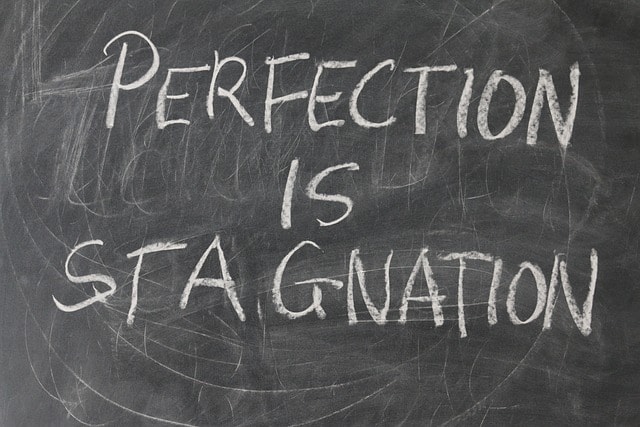
If you went to law school, you were trained from day one that perfection is the standard. Cross every T. Dot every I. A missed detail isn’t just an oversight, it’s a character flaw. That conditioning doesn’t stay in the classroom. It follows you into your practice, your firm/company, your relationships, and eventually into the way you treat yourself.
The problem is perfectionism is exhausting in a way that compounds over time. It creates constant internal pressure because the standard is literally unachievable. Nobody is perfect. No client/case is perfect. No company is perfect. But when your nervous system has been wired to treat anything short of perfect as failure, you are running a stress response almost continuously without even knowing it.
And perfectionism doesn’t travel alone. It brings the fear of failure with it. For high performers, these two are almost always connected. Perfectionism sets an impossible standard. The fear of failure punishes you for not meeting it. Together they create a loop that is genuinely hard to break out of.
I’ve seen this pattern play out dozens of times with the professionals I’ve worked with. A composite that captures what I’ve witnessed repeatedly: a lawyer at a mid-sized firm, technically talented, clearly capable, but quietly falling behind. Not because they weren’t working hard enough. Because they were working too carefully. Every memo took twice as long as it should. Every email got reread four times before sending. Every task had to be perfect before they could move to the next one, which meant the next one never came fast enough.
The stress wasn’t coming from the workload. It was coming from the impossible internal standard they were applying to the workload. And because they were falling behind, the fear of failure kicked in and added more pressure on top of the perfectionism. A figure eight loop, as I describe it in my Stress Less work, where each half feeds the other and the whole thing keeps spinning. This person was on the verge of getting fired before we started working together.
What shifted wasn’t their talent or their work ethic. It was their relationship with good enough. They learned that done and solid beats perfect and late every time. That no one is perfect, and the goal is to do your best and move forward. Once that pressure valve released, they got more work done, not less. They went home at night feeling fulfilled instead of depleted. That’s not a small thing. That’s the difference between a career that grinds you down and one that actually works.
Environmental and Cultural Influences

The legal profession doesn’t just tolerate stress addiction. In many ways it celebrates it. Billing hours, always-on availability, the glorification of busyness as a proxy for value. The culture rewards the very behaviors that indicate a problem.
And it’s not just law. Any high-performance environment that treats constant stress as proof of commitment is conditioning its people toward addiction. Hustle culture, social media feeds full of people performing their exhaustion like a badge, workplaces that create artificial urgency and then wonder why everyone is burning out. These environments make stress addiction invisible because the behavior looks like success from the outside.
Biological Predisposition
Some people are more susceptible to this pattern than others. Early childhood experiences play a significant role. If you grew up in a household where chaos felt normal, where high stress was the baseline, your nervous system adapted to expect that level of stimulation. As an adult, calm doesn’t feel safe. It feels suspicious.
Genetics also factor in. How your body processes stress hormones, how your dopamine system responds to pressure, these are partly inherited. Which means for some people the pull toward stress addiction is stronger from the start, and recognizing that isn’t an excuse. It’s useful information.
The Hidden Health Costs of Stress Addiction
While stress addiction might seem like just a bad habit or personality quirk, the health consequences are serious and far-reaching. Chronic exposure to elevated stress hormones affects virtually every system in your body, creating both immediate symptoms and long-term health risks.
Achieving less stress can significantly reduce the risk of these health problems and support long-term well-being.
Physical Health Consequences

I want to tell you something that took me 25 years to fully understand.
About two years into my law practice I woke up at 3am with a strange sensation in my chest. I felt my pulse and knew immediately that something wasn’t right. No pain, no pressure, just something unmistakably off. I called a friend with a medical degree first thing in the morning. They told me to wait until the doctor’s office opened and get in as soon as possible.
The doctor listened to my heart for about thirty seconds and called an ambulance.
It wasn’t far to the hospital. They hooked me up to the machines and I was lying there trying to process what was happening when my mother walked in and saw the EKG reading. I watched her face change. That moment is burned into my memory.
The diagnosis I got that day? The doctor called it “holiday heart.” Blamed it on a couple of glasses of wine I’d had the night before.
That wasn’t it.
I had those irregular heartbeats for the next 25 years. Along with migraine headaches. Weekly tension and pressure headaches that became so routine I stopped noticing them. Getting hit with a flu or a cold every few months like clockwork, my immune system waving a white flag on a quarterly schedule. I was two years into my career, already a partner, already growing fast, already opening new offices and a title company. I was also already running my body into the ground and had no framework for understanding why.
Here’s what the doctors didn’t tell me then, and what most people still don’t hear: chronic stress doesn’t stay in your head. It moves into your body and starts doing structural damage. The same cortisol and adrenaline that make you feel sharp and capable in a crisis become corrosive when they never get turned off. Your cardiovascular system takes the hit. Your immune system gets suppressed. Your nervous system stays stuck in high alert until high alert becomes the only setting it knows.
I tried everything to manage it. Stress management techniques, more exercise to burn it off, meditation in the early days. These helped a little, briefly. But they were coping mechanisms, not solutions. You can’t out-exercise or out-meditate a nervous system that is fundamentally wired to stay in crisis mode. The stress was being generated from the inside, and I was only ever treating the outside.
The irregular heartbeats didn’t go away until I understood that I was doing the stress to myself. Not that stress was happening to me, not that it was an inevitable feature of the profession, but that I was creating it through patterns I had never examined. Once I understood that and started working with it rather than around it, the arrhythmias stopped. So did the migraines. So did the quarterly illnesses.
Twenty-five years of symptoms resolved when I addressed the actual source.
That’s what’s at stake here. Not just feeling better day to day. Not just being less irritable or sleeping more soundly. The health costs of unaddressed stress addiction are real, cumulative, and in many cases irreversible if you wait long enough. Your cardiovascular system. Your immune function. Your cognitive clarity. Your relationships. Your ability to actually show up for your life and your work.
I spent years working on and off because my body finally forced me to stop. I lived off savings during stretches where I simply couldn’t sustain the pace. That’s the bill chronic stress eventually sends. It doesn’t arrive all at once. It accumulates quietly for years and then lands when you can least afford it.
You don’t have to wait for the 3am moment to take this seriously.
These weren’t unique to me. They’re patterns that show up consistently in people running on chronic stress:
Cardiovascular problems are among the most serious risks of chronic stress. Constantly elevated cortisol levels and frequent adrenaline surges put tremendous strain on your heart and blood vessels. This can lead to high blood pressure, irregular heart rhythms, and significantly increased risk of heart disease. The persistent inflammation caused by chronic stress also contributes to the development of arterial plaque, further increasing cardiovascular risk.
Weakened immune system is an inevitable result of ongoing stress hormone exposure. Cortisol naturally suppresses immune function as part of the body’s short-term stress response, but when levels remain elevated chronically, your body becomes much more susceptible to infections, viruses, and other illnesses. You may notice that you get sick more frequently and take longer to recover.
Digestive disorders and metabolic issues commonly develop in people with stress addiction. Chronic stress disrupts normal digestive processes, potentially leading to conditions like irritable bowel syndrome, acid reflux, or ulcers. Elevated cortisol also promotes weight gain, particularly around the midsection, and can contribute to insulin resistance and diabetes risk.
Chronic pain conditions and muscle tension disorders often develop as a result of persistent stress. Your muscles remain partially contracted when you’re constantly stressed, leading to headaches, neck and back pain, and overall body stiffness. Over time, this tension can contribute to more serious musculoskeletal problems.
Premature aging and cellular damage occur at the molecular level due to chronic cortisol exposure. Stress accelerates the aging process by shortening telomeres – the protective caps on chromosomes – and increasing oxidative stress throughout the body. This manifests as earlier onset of age-related conditions and faster visible aging.
Mental Health Impact

The mental health costs of stress addiction are harder to see than the physical ones. They creep in gradually and start to feel like personality traits. You tell yourself you’re just a worrier. Just someone who needs to push through. Just going through a rough patch.
That’s what I told myself too.
When my body finally forced me to slow down, the mental picture was just as bleak as the physical one. I didn’t want to get out of bed in the morning. I felt genuinely helpless, which is a strange and disorienting feeling for someone who had spent years running multiple businesses and never met a problem they couldn’t outwork. The energy was gone. The focus was gone. I had brain fog so thick that simple tasks felt impossible.
What I didn’t understand then was how interconnected all of it was. The adrenal exhaustion wasn’t just making me tired. It was disrupting my entire endocrine system. My thyroid levels dropped. My vitamin D levels dropped to what my doctors described as hazardous levels. I spent years going from doctor to doctor trying to piece together what was happening, and the honest truth is that nobody could fully figure it out. The medical system was treating individual symptoms without seeing the system that was generating them.
Intuitively I knew stress was at the center of it. That intuition turned out to be right.
Once I rebuilt my vitamin D levels and started genuinely understanding how stress works, not just managing it but understanding what creates it and how to stop creating it, things shifted in a way that years of coping strategies never produced. I’ve reduced my stress by 90% on most days. Not through willpower. Not through better time management or breathing exercises. Through understanding the source.
Here’s what that period taught me about the mental health costs of chronic stress that don’t make it into most articles:
Burnout isn’t just exhaustion. Everyone talks about burnout like it’s a really bad tired. It isn’t. It’s a state where your system has been so depleted for so long that normal recovery doesn’t work anymore. Sleep doesn’t restore you. Weekends don’t restore you. Vacation doesn’t restore you. You come back from time off feeling exactly as depleted as when you left because the problem isn’t the hours. It’s the underlying pattern generating the stress in the first place.
The cognitive impact is real and underestimated. Brain fog, difficulty concentrating on anything that isn’t a crisis, memory problems, reduced mental clarity during calm periods. For lawyers this is particularly dangerous because your cognitive performance is your product. When chronic stress starts eroding that, the consequences aren’t just personal. They show up in your work.
Depression and mood dysregulation develop quietly. When your brain’s reward system has been running on stress-induced dopamine hits for years, normal life starts to feel flat and unrewarding. The things that used to bring satisfaction stop working. You can find yourself going through the motions of a successful life while feeling strangely empty inside.
Anxiety becomes the background noise of everything. Not dramatic panic attacks necessarily, just a persistent low-grade unease that never fully lifts. A sense that something is wrong even when nothing specific is wrong. That’s your nervous system stuck in alert mode with nowhere to direct the energy.
The identity piece is the hardest part. Nobody talks about this one. When you’ve built your entire sense of self around being capable, productive, and high performing, and then your body forces you to stop, the mental health impact isn’t just about symptoms. It’s about who you are without the performance. That’s a genuinely difficult question to sit with. And it’s one worth answering before your body forces the issue

Proven Strategies to Overcome Stress Addiction
I want to be BRUTALLY honest with you about something before we get into what actually works to eliminate your stress, not just manage it.
Over the years I worked through more than 45 different stress management and stress reduction modalities. Meditation, exercise, breathing techniques, therapy, supplements, dietary changes, journaling, yoga, and things far less mainstream than any of those. Some of them helped. Briefly. Some of them I still use today because they have genuine value as part of a broader practice. You can read that full breakdown here: I Tried Everything to Manage My Stress — Here’s What Didn’t Work and Why.
But none of them solved the problem. And for a long time I couldn’t figure out why.
The reason, I eventually understood, is that stress management and stress reduction are both working on the wrong end of the equation. They’re dealing with stress that has already been created. You generate the stress, it accumulates in your body and mind, and then you try to discharge it through exercise or decompress it through meditation or numb it through whatever else you reach for. Round and round. The relief is real but temporary because the source is still running. You can read that full breakdown here: I Tried Everything to Manage My Stress — Here’s What Didn’t Work and Why.
That’s what Stress Less teaches.
The pressure you feel isn’t actually coming from your workload, your caseload, your inbox, or your responsibilities. It’s coming from the constant internal fight against what’s happening. The resistance. The gap between what is and what you think should be. The subconscious belief patterns and thought loops that keep your nervous system in a state of high alert even when the external situation doesn’t warrant it.
When you learn to spot that internal fight in real time, and release it rather than manage it or suppress it, something different happens. The body relaxes. The mind clears. The stress doesn’t get discharged after the fact. It doesn’t get created in the first place.
That’s not stress management. That’s working at the root.
For most high performers, this requires unlearning some deeply held beliefs. That pressure produces performance. That stress means you care. That calm means you’re not trying hard enough. None of those are true, but they run quietly in the background for years, generating resistance, generating stress, generating the very pattern we’ve been talking about throughout this article.
What Actually Helps in the Short Term
That said, there are practices worth having while you do the deeper work. Not as solutions, but as support.
Regular physical movement helps discharge accumulated stress hormones from the body. Not as punishment or as a way to earn rest, just as maintenance.
Sleep protection matters more than most high performers are willing to admit. The nervous system does its repair work during sleep and chronically shortchanging that accelerates every symptom we’ve covered in this article.
Mindfulness and meditation, practiced consistently, begin to create the gap between stimulus and response that makes the deeper work possible. They won’t eliminate stress on their own but they build the self-awareness that the root cause work requires.
And honest conversation, with a coach, a therapist, or someone who has done this work themselves, accelerates everything. You cannot see your own patterns clearly from inside them. That’s not a character flaw. It’s just how blind spots work.
The goal is not a stress-free life. Pressure is part of being alive and doing meaningful work. The goal is to stop manufacturing suffering on top of the inevitable challenges, and to build a nervous system that can meet difficulty without being destroyed by it.
That’s what’s possible. I reduced my stress by 90% on most days. Not by managing it better. By understanding where it was actually coming from.
FAQ
Can stress addiction be as serious as drug or alcohol addiction?
Yes, and I’d argue it’s harder to recognize because our culture celebrates it. The neurochemical mechanism is similar. Your body becomes dependent on its own stress hormones the same way it becomes dependent on an external substance. The withdrawal symptoms when you try to slow down, the restlessness, the irritability, the sense that something is wrong, are real. The health consequences over time, cardiovascular damage, immune suppression, cognitive decline, are real. The difference is that nobody stages an intervention for someone who works too hard. The addiction gets rewarded with promotions and praise right up until the body breaks down.
How long does it take to recover from stress addiction?
It depends on how long the pattern has been running and how willing you are to address the root cause rather than just the symptoms. Some people notice meaningful shifts within weeks of doing the deeper work. Full recovery, meaning a genuinely different relationship with stress rather than just better coping, takes longer. In my own case it was a process of years, though the most significant shift happened once I stopped trying to manage stress and started understanding where it was actually coming from. The nervous system needs time to recalibrate. Be patient with that process but don’t use it as a reason to delay starting.
Is it possible to have a demanding job without being addicted to stress?
Absolutely. This is one of the most important distinctions in this entire article. A demanding job creates pressure. Stress addiction is what happens when you can no longer return to baseline after the pressure lifts. You can handle an intense caseload, run a firm, manage complex deals, and still go home and actually be present. The goal isn’t a low-pressure life. It’s a nervous system that can meet high pressure without being hijacked by it.
What’s the difference between being ambitious and being addicted to stress?
The tell is in how you feel and function. Healthy ambition drives you forward and you still have the cognitive capacity, the energy, and the physical health to sustain it. You sleep reasonably well. You can think clearly. You recover from hard stretches.
Stress addiction looks like ambition from the outside but feels completely different from the inside. You’re overwhelmed and exhausted but can’t stop. You’re not sleeping well. You’re getting sick regularly. Sometimes you have trouble thinking straight and you push through anyway because stopping feels worse than continuing. The drive isn’t coming from genuine motivation anymore. It’s coming from a nervous system that doesn’t know how to downshift.
If you’re achieving things but feel burnt out, cognitively foggy, and physically depleted most of the time, that’s not the price of ambition. That’s stress addiction wearing ambition’s clothes.
Can stress addiction affect my relationships?
More than most people are willing to acknowledge. When you’re chronically stressed, exhausted, and not sleeping well, you have very little emotional bandwidth left for the people around you. The anger that builds up from suppressed emotions has to go somewhere, and it usually goes toward the people closest to you. Not because you want to hurt them. Because they’re there and your filter is gone.
What does that do to the people around you? It puts them on edge. It creates stress in them because they can feel something is wrong even if they can’t name it. It makes them walk on eggshells. Over time it creates distance, resentment, and a kind of loneliness that’s particularly painful because you’re surrounded by people who care about you but can’t actually reach you.
The people closest to a stress addict often absorb what the stress addict can’t process. That’s worth sitting with honestly.
Ready to Stop Managing Stress and Start Eliminating It?
If you recognized yourself anywhere in this article, you already know that breathing exercises and time management tips aren’t going to cut it. You’ve probably tried them. They help for a few hours and then the pressure creeps right back in.
That’s not a willpower problem. That’s a root cause problem.
The stress you’re carrying isn’t just coming from your caseload, your inbox, or your responsibilities. It’s being generated from the inside, by patterns you’ve never been shown how to interrupt. Until you address that, you’re treating smoke instead of fire.
I put together a free three-part video series that gets into exactly how this works. Not another list of coping strategies. The actual mechanism behind why stress keeps coming back, and what it looks like to address it at the source.
If you’re a high performer who is tired of white-knuckling your way through your days, this is where to start.
Yes, Show Me How to Stress Less →
A Note Before You Go
Everything in this article comes from personal experience and years of research, not a medical degree. If you’re dealing with serious physical or mental health symptoms, please work with qualified healthcare professionals. What I share here is meant to open a door, not replace a doctor, therapist, or licensed counselor. Your situation is unique and deserves personalized attention from people trained to provide it.
