How Much is Too Much?
Updated May 21, 2026
I missed every single one of these warning signs for over two decades.
Not because I wasn’t paying attention. I was one of the most organized, self-aware, productivity-obsessed people I knew. I was meditating, exercising, reading every book I could find on stress and performance. I had coaches. I had systems. I had a planner pad and an OmniFocus setup that mapped every hour of my week across four law offices and three companies.
And I still missed them. Because when you’re in the middle of chronic stress, the warning signs don’t feel like warning signs. They feel like the price of admission for the life you’ve chosen. They feel like Tuesday.
This article is for anyone who suspects they might be pushing too hard but hasn’t quite connected the dots yet. These five warning signs are the ones I lived through personally, ignored for years, and eventually paid a serious price for. Recognizing them early is the difference between making a course correction and waiting until your body makes the correction for you.
Warning Sign 1: Physical Symptoms That Won’t Go Away
The first warning signs are almost always physical. Your body starts sending signals long before your mind is ready to receive them.
For me it started with tension headaches two or three times a week. Not occasional headaches from dehydration or a bad night of sleep. Persistent, predictable headaches that lived in my neck and shoulders and radiated up into my skull. I was popping ibuprofen so regularly that it eventually started affecting my stomach, which added a new layer of physical problems on top of the original ones.
I saw chiropractors regularly. I got massages. I meditated for an hour a day. And within 24 hours of any treatment I was right back where I started. The tension would return because nothing I was doing was addressing what was generating it. I was treating the output while the input kept running.
The arrhythmias started around the same time. Irregular heartbeats once a week or more that I mostly ignored because I didn’t know what else to do with them. I was already seeing a cardiologist and taking prescribed medication, and the episodes continued anyway. My body was trying to tell me something and I kept changing the subject.
Physical symptoms that won’t respond to basic self care, headaches, muscle tension, digestive problems, sleep disturbances, recurring illness, are your nervous system’s first language. It speaks in the body before it speaks anywhere else. If you’re treating symptoms repeatedly without lasting relief, the source hasn’t been addressed.
I eventually ended up in the hospital with a stress related migraine so severe I couldn’t speak. That story deserves its own article and it’s getting one. [placeholder: link to Can Stress Make You Physically Ill when revised]
The short version is this: I ignored the physical warning signs for so long that my body eventually stopped asking and started demanding.

Warning Sign 2: Concentration and Memory Problems
Chronic stress doesn’t just affect your body. It systematically degrades your ability to think.
I teach this in the continuing legal education programs I deliver to lawyers now, because it’s one of the most professionally devastating effects of sustained stress and almost nobody in the legal profession talks about it openly. Your cognitive function doesn’t just dip when you’re stressed. It deteriorates progressively as the pressure builds and the nervous system stays overwhelmed.
For me it showed up as brain fog that came in waves. There were days when I had genuine difficulty focusing, difficulty putting sentences together, difficulty doing work that should have been routine. I would have to take breaks just to get through basic tasks. Not because I was lazy or distracted. Because my brain was running on fumes.
Part of what was happening was nutritional. Years of chronic stress had depleted critical vitamins and minerals in my body. My vitamin D levels were extremely low, which alone causes debilitating fatigue and brain fog. My B vitamins were depleted as well. The stress was wearing down the body, the illnesses that followed wore it down further, and the nutritional deficiencies made everything worse. It became a self reinforcing cycle that took years to unwind.
This cognitive impact was most acute during the period leading up to my move from Florida to North Carolina, when everything finally hit a wall. I was working off and on for roughly four years during that period because the fatigue and brain fog would hit in waves that made sustained work impossible. That’s not a bad week. That’s years of accumulated damage finally collecting its debt.
If you’re finding it harder to focus than it used to be, making more mistakes in familiar tasks, losing your train of thought mid sentence, or feeling mentally foggy in ways you can’t explain, stress is a primary suspect. Get your vitamin D and B12 checked. And take the cognitive symptoms as seriously as you’d take the physical ones.
Warning Sign 3: Emotional Changes and Mood Swings
Stress doesn’t just make you feel bad. It makes you feel everything more intensely and less accurately.
I can admit honestly that for most of my years as a lawyer I was hypersensitive to almost everything. Small irritations felt large. Large problems felt catastrophic. The lawyer brain makes this worse because legal training actively conditions you to think in worst case scenarios. That’s useful in a courtroom. It’s devastating as a default setting for your nervous system.
There’s also what researchers now call fight, flight, freeze, and fawn responses. Most people know fight or flight. Freeze is when the nervous system shuts down under overwhelm rather than mobilizing. Fawn is the people pleasing, over accommodating response that’s extremely common in lawyers and high performers who manage stress by saying yes to everything to avoid conflict. All four responses share one thing: they’re your nervous system operating from a state of perceived threat rather than genuine choice.
The clearest example I have of my own emotional dysregulation from that period happened on a Friday evening drive down to Melbourne, Florida, where my family owned a place near the beach. Two and a half hours in the car after a brutal week, arriving to decompress for a long weekend, and I had a new ceiling fan to install. I’d installed plenty of fans in my life going back to childhood. No big deal.
Except the fan was defective. It didn’t work. And I completely lost it.
I kicked the box. I pitched a fit over a ceiling fan. And even in the middle of it I could see exactly what was happening. This wasn’t about the fan. This was months of accumulated pressure finding the nearest exit. The fan was just the door.
That’s what emotional warning signs look like in real life. Not dramatic breakdowns. Just disproportionate reactions to ordinary frustrations that tell you the balloon is getting dangerously full.
Warning Sign 4: Behavioral Changes in Daily Habits
When stress reaches a certain level the behaviors change. Usually in ways that feel like relief in the moment and create more problems over time.
For me the primary behavioral change was food. And that pattern didn’t start in the law firm. It started in childhood.
I grew up in an angry house. Both parents had short fuses and the tension was constant. Food became comfort early on, a full belly meant safety, warmth, love. My grandmother was a wonderful cook and that side of the family had generations of using food to soothe the soul. That pattern was already established before I ever passed the bar.
So when the pressure of managing four offices and three companies and a full litigation caseload became relentless, I reached for comfort food. Pizza. Chinese takeout. Whatever was available and immediate. Some people grab the whiskey. I grabbed the carbs. The result was the same: a vicious cycle where the temporary relief of eating created its own health problems, which added more stress, which sent me back to the food.
The other behavioral change worth naming is the resistance to the work itself. A Broward Sheriff’s deputy who lived near my first townhouse once called lawyers glorified paper pushers. I’d never heard that before and I recognized immediately how true it was. The actual daily work of law, the drafting, the document review, the procedural grind, was deeply tedious to me. That resistance to the work I was doing every day was generating its own stress on top of everything else. Resistance to your daily reality is one of the most consistent and least recognized stress generators there is.
And then there was the social withdrawal. By Friday evening I wanted to see nobody. Talk to nobody. Interact with nobody. During the week I was networking, litigating, doing closings, managing staff across multiple offices. The last thing I wanted on a weekend was to be out in loud restaurants and crowded bars. The withdrawal felt necessary. And it was, partly. But it also cut me off from the kind of genuine human connection that actually helps regulate a stressed nervous system.

Warning Sign 5: Chronic Fatigue and Energy Depletion
This is the warning sign most people dismiss the longest because it sneaks up gradually and eventually starts to feel normal.
Here’s what chronic stress fatigue actually looks like from the inside. You wake up just as tired as you were when you went to bed. You drag yourself through the morning on coffee. You hit a wall somewhere in the early afternoon and reach for sugar or chocolate or another coffee to push through. Your adrenal glands have been working overtime for so long that they’re exhausted, and the caffeine and sugar that used to help are producing diminishing returns. Your body has become so saturated with stress hormones that it’s become dependent on them just to function. The cortisol loop I wrote about in detail in the stress addiction article is running full time. [link: stress addiction article]
The fight, flight, freeze, and fawn responses that were designed for short term survival are now your permanent operating system. Your endocrine system is taking damage. Your adrenals are depleted. And every cup of coffee and every sugar fix is making the underlying problem worse while temporarily masking the symptom.
For me this pattern was most acute during the four years I spent working off and on after leaving the law. The fatigue came in waves that were unpredictable and sometimes incapacitating. There were days when getting through basic tasks required more energy than I had available. The vitamin D deficiency made the brain fog and exhaustion worse. The nervous system that had been running in overdrive for decades was finally demanding rest it had never been allowed to have.
The way out isn’t more coffee. It isn’t pushing harder. It’s recognizing that the fatigue is information, not weakness, and starting to address what’s generating it at the source rather than patching the symptom with stimulants that accelerate the damage.
When These Signals Become Dangerous
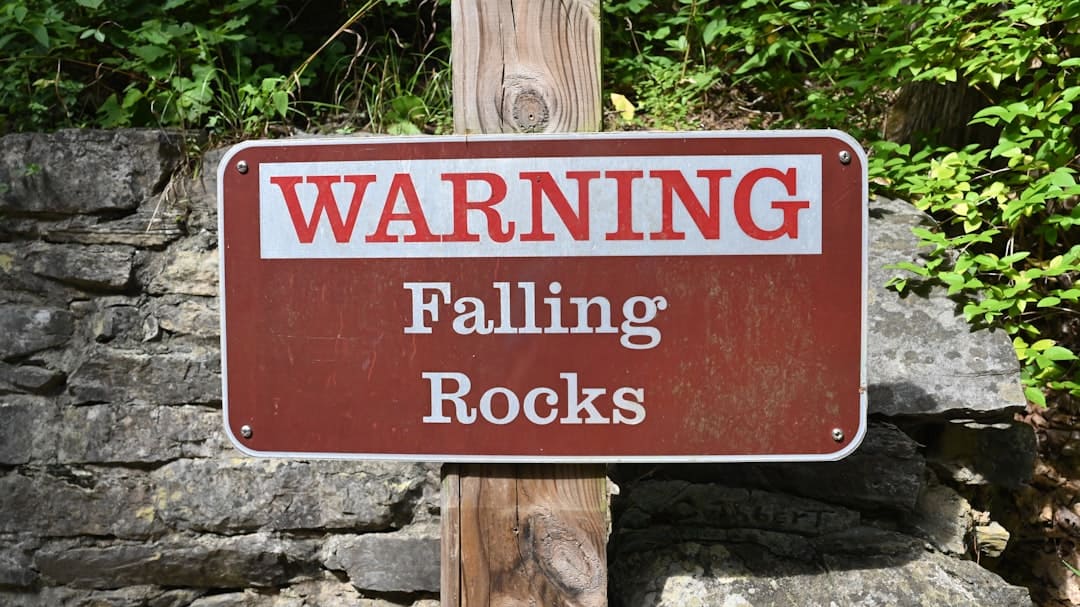
These five warning signs exist on a spectrum. At the mild end they’re inconvenient. At the severe end they become medical emergencies.
I know this from experience. Stress landed me in the hospital more than once. The most serious episode involved a migraine so severe I was speaking incoherently when I arrived at the emergency room. The doctors initially feared stroke or meningitis. The full story of that day is one I’m telling in depth in a separate article because it deserves that space. [placeholder: link to Can Stress Make You Physically Ill when revised]
What I want you to take from this section is simple: if three or more of these warning signs are showing up consistently in your life, don’t wait. See your doctor. Talk to a therapist. Get blood work done. Take the signals seriously before your body stops sending signals and starts sending consequences.
The four fight, flight, freeze, and fawn responses your nervous system runs under chronic stress were designed for short term survival. They were never designed to be a permanent way of living. The longer they run unaddressed the more damage accumulates and the longer the recovery takes.
I couldn’t work for stretches of several years because I ignored these warning signs for too long. That’s not a cautionary tale I’m sharing to be dramatic. It’s the practical cost of waiting until the body makes the decision for you.
What to Do When You Recognize These Signs

The first step is the hardest one: stop treating the symptoms as the problem.
Tension headaches are not a headache problem. Brain fog is not a focus problem. Emotional reactivity is not a personality problem. Comfort eating is not a willpower problem. Exhaustion is not a sleep problem.
They are all outputs of the same input: a nervous system that has been generating and accumulating stress for longer than it can sustainably manage.
I spent over twenty years trying to manage those outputs with techniques that helped at the edges but never touched the source. What eventually worked was understanding how stress is actually created, through resistance, through habitual patterns of thought and reaction, through beliefs so embedded they feel like reality, and then addressing it there.
That’s what my Stress Less work is built around. Not more coping strategies. Not another app or retreat or breathing technique. A framework for understanding why you keep generating the stress you do and how to stop at the root.
If you’re seeing yourself in any of these five warning signs, the full picture of why stress management alone won’t solve them is here: [link: Why Stress Management Fails blog post]
And if you’re ready to explore what actually addressing the source looks like: https://www.stresslessplus.com
Don’t wait until your body makes the decision for you. I did. It cost me years.